
Choosing Cost-Effective Energy-Saving Inverter Parts for Old Elevators
As elevators age, many older systems gradually begin to show problems such as high energy consumption, unstable operation, and frequent faults.
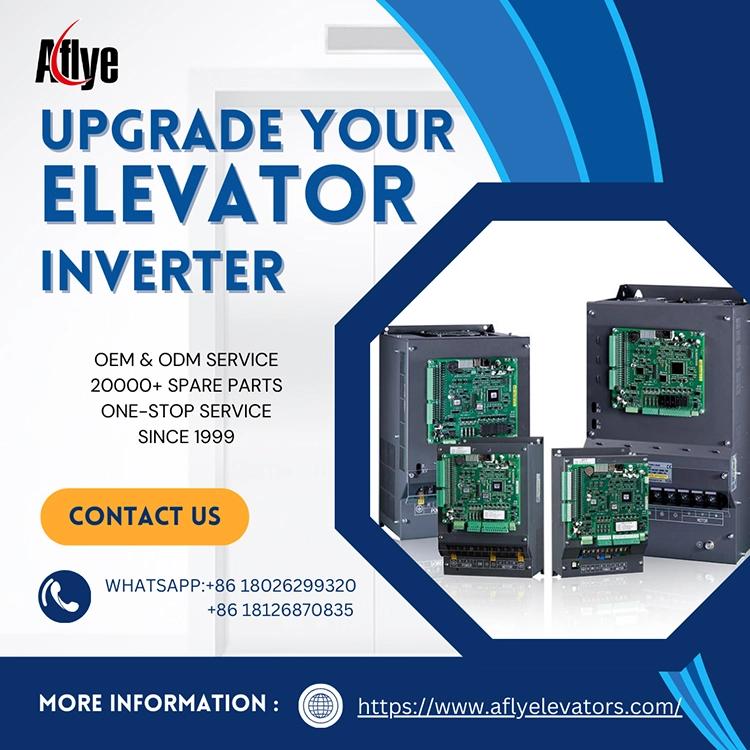
Compared with full elevator replacement, installing or upgrading an energy-saving inverter (VFD) has become a far more cost-effective modernization solution for old elevators.
As an elevator and escalator spare parts supplier with long-term experience in maintenance and retrofit projects, A-FLY shares practical insights on how to select energy-saving inverter components for old elevators—helping customers achieve real energy savings and stable operation while keeping costs under control.
1. Why Do Old Elevators Need Energy-Saving Inverters?
Early-generation elevators typically use traditional control methods, which often result in:
Strong starting and stopping impact, reducing ride comfort
Motors running at full power for long periods, leading to high energy consumption
Increased mechanical shock, accelerating wear of related elevator components
By installing or upgrading to an energy-saving inverter, elevators can achieve smooth start-up, soft braking, and intelligent speed control, effectively reducing power consumption while extending the service life of key components such as the traction machine and brake system.
2. Key Conditions to Confirm Before Selecting an Inverter for Old Elevators
1. Motor Type and Power Parameters
It is essential to confirm whether the elevator uses an asynchronous motor or a permanent magnet synchronous traction machine, as well as its rated power, voltage, and speed.
2. Control System Compatibility
Older elevators use diverse control logics. The inverter must be compatible with the existing control signals to avoid additional modification costs.
3. Installation Space and Cooling Conditions
Older control cabinets often have limited space, making inverter size and heat-dissipation design especially important.
3. How to Identify a “High Cost-Performance” Energy-Saving Inverter
A truly cost-effective inverter is not simply one with a low price. It should balance the following factors:
1. Stable Energy-Saving Performance
High-quality inverters maintain stable output under different load conditions, preventing energy-saving performance degradation.
2. Smooth Operation with Reduced Mechanical Impact
Smooth acceleration and deceleration curves help reduce wear on critical components such as wire ropes, traction sheaves, and brakes.
3. User-Friendly Parameter Setup
Simplified commissioning significantly shortens installation time and elevator downtime.
4. Sustainable Spare Parts and Technical Support
Long-term availability of spare parts and reliable technical support provide real long-term cost advantages.
4. Common Misunderstandings in Old Elevator Energy-Saving Retrofits
Focusing only on the inverter itself while ignoring compatibility with auxiliary electrical components
Failing to evaluate power supply conditions, resulting in unstable inverter operation
Overlooking long-term maintenance and replacement costs
Energy-saving retrofits should be treated as system upgrades, not merely the replacement of a single component.
5. A-FLY’s Energy-Saving Inverter Solutions for Old Elevators
As a professional elevator and escalator spare parts supplier, A-FLY provides:
Energy-saving inverters suitable for old elevators
Matching control boards, electrical modules, and connection components
Compatible retrofit solutions that reduce secondary construction work
A-FLY elevator components are widely used in residential, commercial, and public building projects, helping customers achieve energy efficiency, smooth operation, and reliable performance within limited budgets.
Conclusion
Selecting an energy-saving inverter for an old elevator is not simply about “changing a device”—it is a critical decision that directly affects long-term operating costs. With scientific selection and reliable component support, significant energy savings can be achieved without substantial additional investment.
Choose A-FLY to give old elevators renewed efficiency and long-term value.