
Identifying Escalator Main Chain Elongation & Replacement Options
In high-traffic locations such as shopping malls, subway systems, and airports, the escalator main chain is a core high-load transmission component. If chain elongation occurs and is not addressed in time, it can accelerate wear on other escalator parts and may lead to vibration, abnormal noise, or even safety shutdowns. Therefore, understanding how to detect main chain elongation is a key part of escalator maintenance.
1. Why Does the Escalator Main Chain Elongate?
Escalators continuously carry passenger loads and operate in cycles. The main chain is repeatedly stressed as it engages with sprockets, gradually causing metal fatigue and pin wear. As the clearance between chain links increases, the overall chain length undergoes permanent elongation.
In addition, insufficient lubrication, dust contamination, and improper tension can accelerate this process. These issues are especially common in environments with high humidity or heavy dust.
2. How to Determine Whether the Main Chain Has Elongated
Maintenance technicians typically use the following methods:
Pitch measurement method
Measure the total length across a specified number of chain links and compare it with the standard pitch. If the elongation rate exceeds the manufacturer’s allowable limit (typically around 2%–3%), replacement is necessary.
Operational observation
If the escalator shows periodic vibration during operation, uneven step movement, or abnormal noise from chain and sprocket engagement, it often indicates reduced meshing accuracy caused by chain elongation.
Tension device inspection
If the tensioning device has reached its adjustment limit and still cannot maintain proper chain tension, this is another important sign that the chain has stretched beyond acceptable limits.
3. What Are the Risks of Not Replacing an Elongated Chain?
Excessive chain elongation changes the engagement angle with the sprocket, accelerating abnormal wear of drive sprockets, guide rails, and step rollers. At the same time, chain skipping or tension imbalance may trigger safety protection systems, causing frequent escalator shutdowns and disrupting normal operations in public venues.
4. How to Choose the Right Replacement Chain
When replacing an escalator main chain, priority should be given to models that fully match the original equipment in pitch, strand configuration, pin diameter, and tensile strength. High-quality chains should offer excellent wear resistance and fatigue resistance to withstand long-term continuous operation.
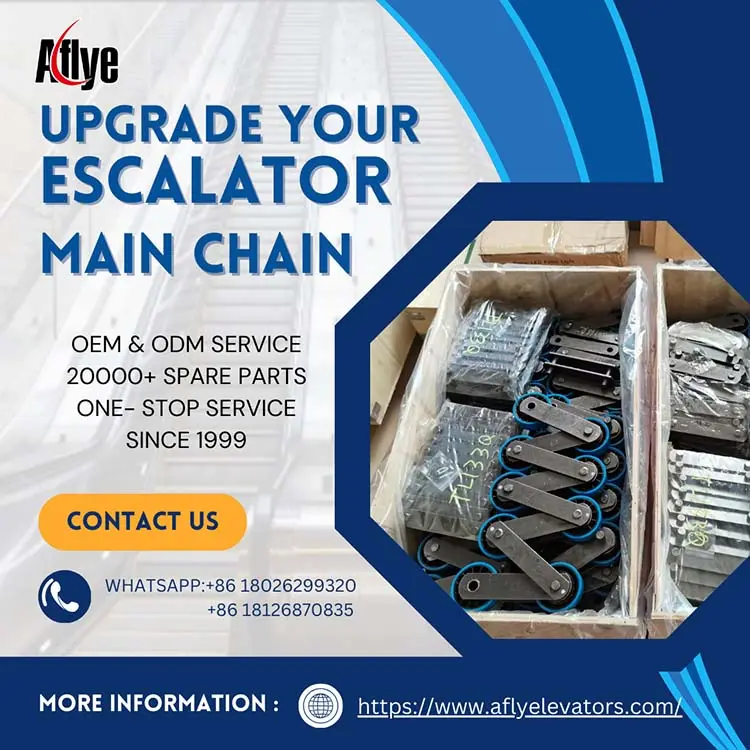
As a professional elevator and escalator parts supplier, A-FLY provides high-standard escalator main chains and related spare parts to global markets. Our products are widely compatible with mainstream brands, ensuring stable transmission and longer service life while helping customers reduce long-term maintenance costs.
Conclusion
Escalator main chain elongation is a gradual fault that can be difficult to detect in its early stages but has a significant impact on overall operation. Regular pitch inspection and timely replacement with high-quality chains are essential to ensure safe and stable escalator performance.