
How to Choose Cost-Effective, Long-Lasting Elevator Buttons
In elevator maintenance and modernization projects, elevator buttons may seem like small components, but they are actually among the most frequently replaced and failure-prone parts. Button malfunctions, dim or dead lights, unresponsive presses, and incompatible models not only increase maintenance costs, but also repeatedly consume manpower and time.
So how can you find elevator buttons that truly save money, save time, reduce hassle, and don’t fail easily?
As a professional elevator and escalator parts supplier, A-FLY has summarized the following practical insights based on extensive customer feedback.
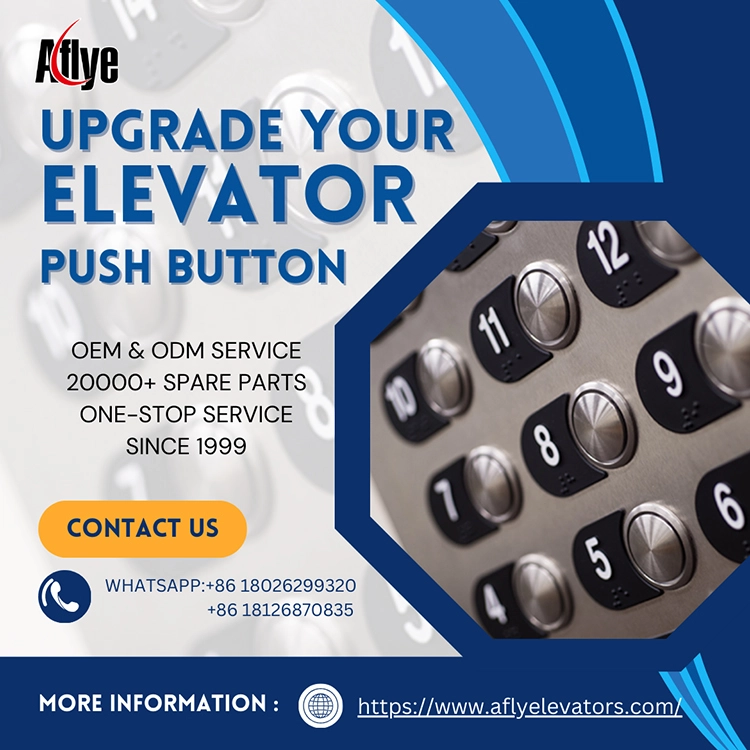
1. Saving Money: Not the Cheapest, but the One That Lasts
Many projects focus only on unit price when selecting buttons, while ignoring replacement frequency and long-term costs. Low-priced buttons often suffer from short contact life, unstable lighting, and materials that age quickly—leading to repeated replacements in a short time.
Buttons that truly save money should feature:
Long-life contact mechanisms
Stable, high-quality LED light sources
Wear-resistant and corrosion-resistant housing materials
Choosing the right button once is far more cost-effective than replacing it repeatedly.
2. Saving Time: Strong Compatibility for Easy Replacement
In older elevators or multi-brand maintenance projects, non-compatible buttons are one of the biggest time wasters. Differences in size, connectors, or voltage often lead to repeated rewiring, drilling, or even rework on site.
Time-saving buttons should offer:
Standard installation dimensions
Support for common voltages such as DC12V and DC24V
Clear wiring definitions compatible with mainstream control systems
A-FLY elevator buttons are widely compatible with various COP / HOP panels, helping customers achieve fast replacement and significantly reducing on-site adjustment time.
3. Reducing Hassle: Simple Structure and Low Failure Rate Matter Most
Button-related headaches often come from internal structures that are not visible, such as:
Oxidized contacts causing poor signal transmission
Separate light boards that complicate repairs
Low protection levels allowing dust or moisture ingress
Buttons that truly reduce hassle usually feature an integrated structural design, stable internal components, and proper external protection—ensuring reliable performance even in humid or high-frequency usage environments.
4. Long Service Life: Materials and Craftsmanship Make the Difference
Button durability largely depends on material selection and manufacturing quality:
Stainless steel buttons are more wear-resistant than coated ones
High-grade engineering plastics resist aging better than ordinary plastics
Sealed designs effectively protect against dust and moisture
In high-traffic locations such as shopping malls, hospitals, and metro stations, buttons are pressed hundreds or even thousands of times daily. Only buttons designed specifically for elevator operating conditions can withstand such long-term use.
5. Choosing the Right Supplier Is More Important Than Choosing the Model
Even the best button becomes a problem if supply is unstable, models change frequently, or after-sales support is unavailable. A reliable elevator parts supplier should be able to:
Provide long-term, stable product models
Support replacement and customization for old elevators
Offer clear and professional selection guidance
As an experienced elevator and escalator parts supplier, A-FLY not only provides button products, but also helps customers choose solutions that are durable, quick to replace, and hassle-free.
6. A-FLY — Making Buttons the Most Worry-Free Elevator Component
A-FLY supplies global customers with:
Elevator buttons (mechanical, illuminated, and touchless types)
Display boards, light boards, and related elevator components
A-FLY buttons are known for high stability, strong compatibility, and long service life. They are widely used in residential elevators, commercial buildings, and modernization projects, helping customers significantly reduce maintenance frequency and total operating costs.
Conclusion
A truly good elevator button may not be the most expensive, but it must withstand time and high usage frequency. With the right selection approach and a reliable supplier, it is entirely possible to achieve lower costs, less downtime, fewer problems, and longer service life.