
How to Determine When Elevator Wire Ropes Need Replacement
As a core load-bearing component of an elevator system, elevator wire ropes directly support the weight of the car and counterweight while transmitting driving force. Their safety condition is directly related to passenger life safety. With 26 years of experience in the elevator and escalator spare parts industry, A-FLY combines real-world cases and industry expertise to explain how to assess when wire ropes should be replaced, along with the relevant standards and replacement cycles—helping operators effectively reduce safety risks.
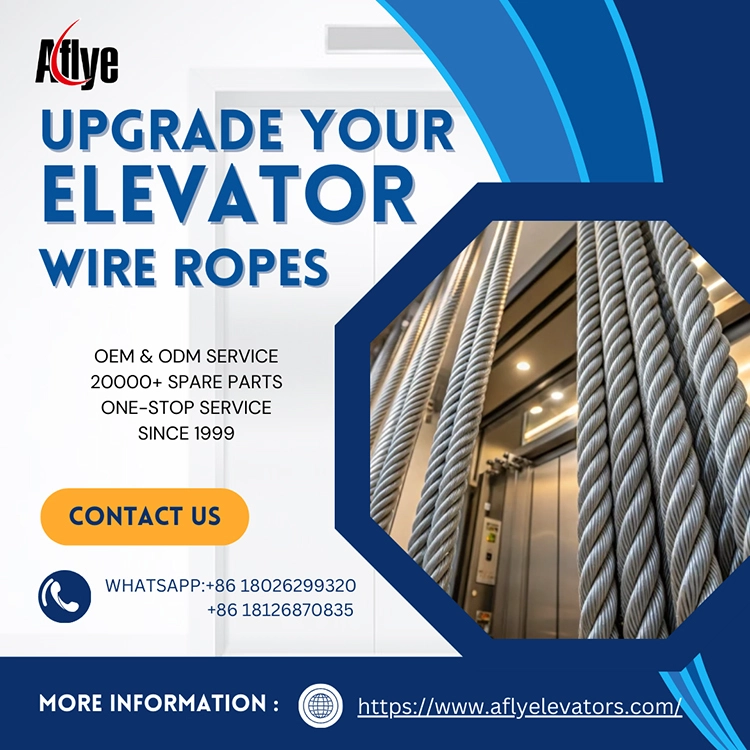
1. Real-World Case Analysis: Key Warning Signs for Wire Rope Replacement
Numerous elevator incidents have highlighted the importance of timely wire rope replacement. In one residential building, an elevator suddenly developed abnormal vibration and noise during operation. Upon inspection, maintenance technicians found multiple broken wires on the rope surface (four broken strands in a single rope) along with severe corrosion. Magnetic particle testing confirmed that the rope’s strength no longer met safety requirements, leading to an emergency shutdown and immediate replacement.
This case clearly illustrates the typical warning signs of wire rope failure. Once excessive broken wires, corrosion, wear, or abnormal operation are detected, replacement must be initiated immediately. At this stage, choosing a supplier with fast response and sufficient inventory is critical. A-FLY stocks elevator wire ropes ranging from 9 mm to 16 mm, supports 24-hour fast dispatch, and significantly shortens fault-handling time.
2. Scientific Criteria for Judging When Elevator Wire Ropes Should Be Replaced
Based on practical experience and industry standards, wire rope condition should be evaluated from three key perspectives: appearance, professional inspection, and operational performance.
Visual Inspection
Wire ropes should be replaced if any of the following conditions are observed:
More than three broken wires in a single strand, or ten broken wires across the entire rope
Diameter reduction exceeding 3% of the nominal diameter
Twisting, deformation, or localized corrosion
Professional Testing
Non-destructive testing methods such as magnetic particle inspection or ultrasonic testing are recommended to detect internal fatigue damage, helping prevent hidden risks where the rope appears intact externally but is compromised internally.
Performance Abnormalities
If braking distance increases or abnormal noise and vibration occur during operation—and other components have been ruled out—the wire rope’s strength and condition should be checked as a priority.
3. Standards and Replacement Cycles for Elevator Spare Parts
As a professional elevator and escalator spare parts supplier, A-FLY strictly follows international quality standards. When replacing wire ropes and related components, two core principles must be observed:
Component Compatibility
Wire ropes must be precisely matched to the elevator brand and model. A-FLY supplies wire ropes compatible with all major elevator brands, ensuring safe and reliable operation.
Standardized Replacement Procedures
Replacement must be carried out by qualified professionals, following proper steps: power shutdown, car securing, and installation and commissioning in strict accordance with technical drawings and safety regulations.
Recommended Replacement Cycles
Residential elevators: typically every 3–5 years
High-traffic environments such as shopping malls and hospitals: 2–3 years
In well-maintained, dry environments, the service life may be extended up to 6 years, provided professional inspections are conducted every six months
In addition to wire ropes, components such as door hanger rollers and traveling cables should also be replaced periodically. With over 2,000 spare parts in stock, A-FLY can quickly respond to urgent maintenance needs.
Conclusion
Elevator safety leaves no room for compromise. Timely replacement of aging components is essential to ensuring long-term safe operation. As a trusted elevator and escalator spare parts supplier, A-FLY offers over 20,000 high-quality elevator components and provides one-stop support, from part selection to replacement consultation, backed by a professional engineering team.By choosing compliant components and following scientifically recommended replacement cycles, elevator operators can ensure stable operation