
Elevator Light Curtain Fault Diagnosis and High-Quality Spare Parts Selection
In modern elevator door systems, the elevator light curtain has become a critical safety protection device. Using infrared sensing technology, it continuously detects obstacles in the door zone during door closing, effectively preventing passenger injury or object trapping. However, after long-term operation or insufficient maintenance, elevator light curtains may develop various faults that affect normal door operation.
As a professional elevator and escalator spare parts supplier, A-FLY combines extensive on-site maintenance experience to systematically explain common elevator light curtain fault diagnosis methods and how to select truly reliable light curtain components.
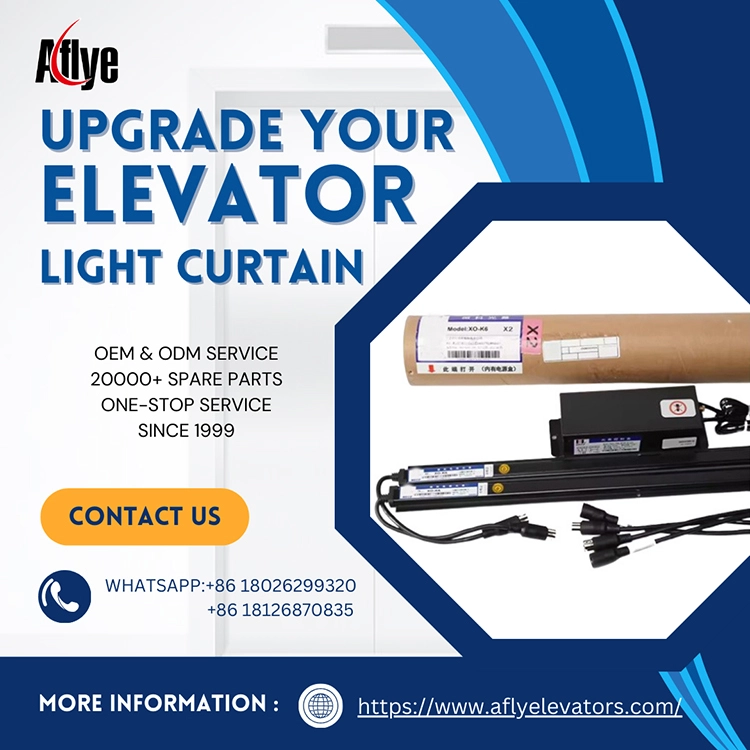
1. Common Elevator Light Curtain Fault Symptoms
In daily operation, elevator light curtain failures usually present in the following ways:
Elevator doors cannot close properly or repeatedly open and close
The system continuously detects an “obstruction” even when no one is present
The light curtain does not respond and loses anti-trap protection
Intermittent door zone error alarms or unexpected elevator stops
These issues not only reduce operational efficiency but may also weaken the elevator’s safety protection.
2. Main Causes of Elevator Light Curtain Failures
1. Surface Contamination or Obstruction
Dust, oil, or moisture on the light curtain lenses can interfere with infrared signal transmission. This is the most common and often overlooked cause.
2. Misalignment of the Light Curtain
Long-term vibration or external impact may cause the transmitter and receiver to fall out of vertical alignment, leading to false detection or signal interruption.
3. Poor Cable or Connector Contact
Aging cables or loose connectors can result in unstable signals and intermittent faults.
4. Aging Internal Components
Light curtains used for many years may suffer reduced sensor sensitivity, creating “blind zones” in the protection area.
5. Incompatibility with the Door Operator System
Some replacement light curtains are not fully compatible with the original door operator control logic, causing misoperation or signal recognition failure.
3. Scientific Approach to Elevator Light Curtain Fault Diagnosis
When abnormalities occur, it is recommended to follow this troubleshooting sequence:
Clean the light curtain surface to eliminate external obstructions
Check whether the light curtain is vertically aligned and securely fixed
Inspect cable connections and connectors
Verify that the light curtain operating voltage matches door system requirements
Replace the light curtain for functional testing if necessary
Systematic diagnosis helps avoid misjudgment and reduces unnecessary repeated replacements.
4. How to Choose High-Quality Elevator Light Curtain Components
Selecting the right light curtain is key to reducing failure rates. High-quality elevator light curtains typically feature:
Proper sensor density with full protection area coverage
Strong anti-interference capability for varying lighting and environments
Stable structure resistant to vibration misalignment
High compatibility with multiple door operators and control systems
Long service life, reducing maintenance frequency
More sensors do not always mean better performance. Truly reliable light curtains focus on overall stability and system compatibility.
5. Common Elevator Light Curtain Models / Part Numbers Reference
In elevator door systems, the light curtain is a critical safety protection device designed to prevent passenger injury and object trapping. Different elevator systems use different light curtain models. Common part numbers include:
Complete Light Curtain Assemblies and Basic Components
DAA24591C4 – Complete safety light curtain assembly, commonly used in standard door operator systems
DAA24591C5 – Light curtain assembly variant for door protection systems
DAA24591C8 – Light curtain model similar to C4/C5, compatible with some door operators
DAA24591H3 – Door zone light curtain (transmitter & receiver), compatible with ETA2404702TX/RX
DAA24591H4 – Alternative version used with H3 series
LAMBDA Series Door Light Curtains
ABA24591T8 – LAMBDA III light curtain / door detection system component
ABA24591P4 – Matching light curtain strip / sensor bar for T8
ADA24591R1 – LAMBDA III light curtain controller (115VAC)
ADA24591R2 – LAMBDA III light curtain controller (220VAC)
AAA174XW3 / AAA174XW4 – Connection cables for transmitter and receiver
ABA24591R1 / ACA24591Q4 / ACA24591R1 – Door light curtain sensors and installation accessories
6. A-FLY — Your Trusted Elevator Light Curtain & Door System Spare Parts Supplier
As an experienced elevator and escalator spare parts supplier, A-FLY provides customers worldwide with:
Various elevator light curtains and infrared detection devices
Elevator door operators, door locks, and complete door system components
Compatible light curtain solutions for elevator modernization projects
A-FLY elevator spare parts are known for high stability, strong compatibility, and low failure rates. They are widely used in residential, commercial, and high-traffic environments. OEM / ODM customization and global supply are supported.
Conclusion
The elevator light curtain is a critical safety component of the door system and should never be overlooked. Only through scientific troubleshooting methods and the selection of high-quality, well-matched light curtain components can long-term elevator safety and stable operation be ensured.
Choose A-FLY to make your elevator door protection more reliable and your operations more secure.