
Elevator Cable Wear Assessment and Replacement Solutions
In elevator systems, elevator cables play a critical role in signal transmission, power supply, and system coordination. Compared with static electrical components, elevator cables operate under continuous bending and vertical movement, making them one of the most wear-prone and hidden-risk elevator spare parts.
As a professional elevator and escalator spare parts supplier, A-FLY has found through maintenance and modernization projects that the root cause of many elevator failures ultimately points to cable aging or damage.
1. Common Signs of Elevator Cable Wear
Elevator cable wear rarely occurs as sudden breakage; instead, it develops gradually. Typical signs include:
Intermittent signal failures during elevator operation
Abnormal floor indicators or occasional button malfunction
Unexplained elevator shutdowns or communication fault alarms
Cracking, peeling, or hardening of the cable outer sheath
Abnormal noise or irregular cable movement during operation
These symptoms often indicate that the cable is approaching the end of its service life.
2. Main Causes of Elevator Cable Wear
1. Long-Term Repeated Bending Fatigue
As the car moves up and down, the cable continuously flexes within a fixed bending radius, causing fatigue damage to the internal copper conductors.
2. Improper Cable Arrangement
Missing guiding devices or poorly positioned fixing points increase localized tension and abrasion.
3. Environmental Influences
High temperatures, humidity, oil contamination, or shaft dust accelerate aging of the cable outer jacket.
4. Mismatched Cable Quality
Non-elevator-specific cables lack sufficient flexibility and fatigue resistance, resulting in a significantly shorter service life.
3. How to Determine Whether Elevator Cables Need Replacement
During routine maintenance, the following key points should be closely monitored:
Visible cracking or hardening of the outer sheath
Random or intermittent faults during elevator operation
Abnormal heat at cable bending sections
Service life approaching or exceeding the design limit
If multiple warning signs are present, continued use will only increase operational risks.
4. Recommended Elevator Cable Replacement Solutions
1. Prioritize Elevator-Specific Traveling Cables
Designed with high flexibility, multi-core structures, and superior bending resistance, they are better suited for long-term operation.
2. Properly Plan Cable Length and Routing
Avoid excessive tension caused by cables that are too short, or uncontrolled swinging due to excessive length.
3. Inspect Guiding and Fixing Devices Simultaneously
When replacing cables, guide rollers and fixing clamps should be checked at the same time to prevent repeated damage to the new cable.
4. Phased Replacement to Minimize Downtime
When conditions allow, planned replacement strategies can be adopted to reduce unexpected elevator shutdowns.
5. A-FLY — A Reliable Supplier of Elevator Cables and Electrical Spare Parts
As an experienced elevator and escalator spare parts supplier, A-FLY provides customers with:
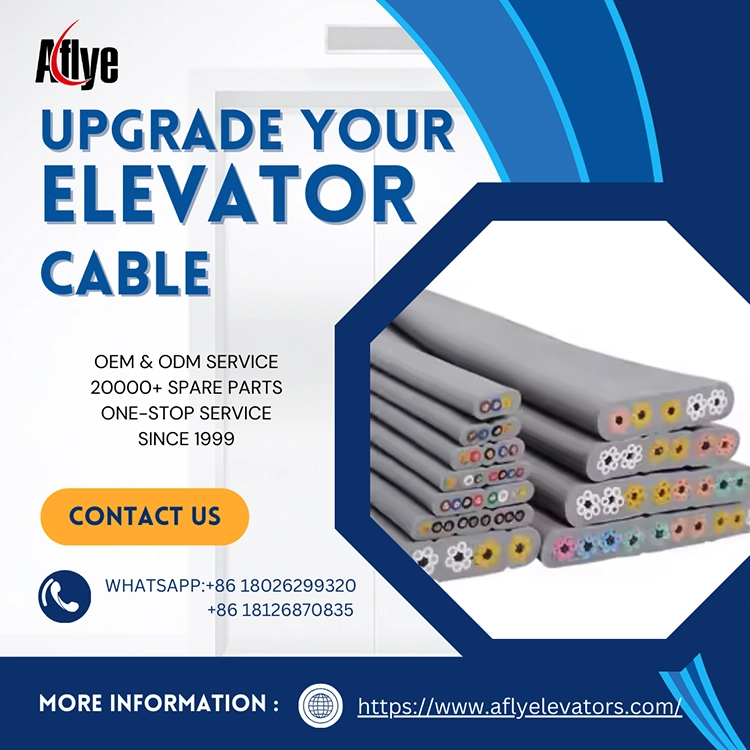
Various elevator traveling cables and control cables
Electrical spare parts suitable for different elevator systems
Selection support for both modernization projects and long-term operation
A-FLY elevator spare parts are known for high stability, strong compatibility, and continuous supply, and are widely used in residential, commercial, and public building projects.
Conclusion
Elevator cable wear may appear hidden, but it can trigger a series of complex failures.Only through scientific wear assessment and timely adoption of appropriate replacement solutions can long-term elevator safety be truly ensured.
Choose A-FLY — ensuring every elevator cable is safe, reliable, and built to stand the test of time.