
Escalator Drive Sprocket Damage Signs & Upgrade Tips
In an escalator transmission system, the drive sprocket plays a critical role in transferring power from the motor to the main drive chain. Once the drive sprocket becomes worn or damaged, it not only affects operational smoothness but may also introduce serious safety risks.
As a professional elevator and escalator spare parts supplier, A-FLY draws on extensive experience from global escalator maintenance and modernization projects to summarize the typical signs of drive sprocket failure and provide reliable component upgrade recommendations.
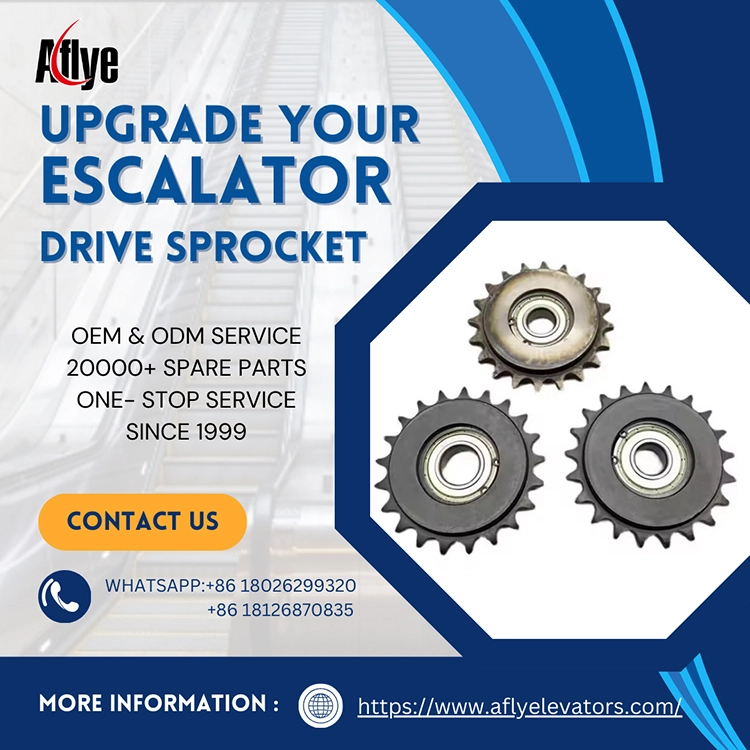
1. Common Signs of Escalator Drive Sprocket Damage
In real-world operation, drive sprocket issues usually develop gradually and present the following symptoms:
Noticeable abnormal noise during escalator operation, especially at startup or during load changes
Main drive chain jumping, vibration, or uneven movement
Sprocket teeth becoming sharp, thinned, or unevenly worn
Frequent chain tension adjustments required, yet stability cannot be maintained
Reduced operating efficiency and increased energy consumption
If ignored, these symptoms often lead to more extensive damage across the entire transmission system.
2. Main Causes of Drive Sprocket Wear and Failure
1. Long-Term High-Load Operation
In high-traffic environments such as shopping malls and metro stations, escalators operate under continuous heavy load, significantly increasing impact and friction on sprocket teeth.
2. Poor Chain-to-Sprocket Matching
Improper matching of chain pitch and sprocket tooth profile causes abnormal meshing, accelerating sprocket wear.
3. Insufficient or Failed Lubrication
Lack of effective lubrication leads to direct metal-to-metal contact, greatly shortening service life.
4. Inadequate Installation Accuracy
Misalignment or improper fixation of the sprocket can cause uneven wear and premature failure.
3. Safety Risks Caused by Damaged Drive Sprockets
Once the drive sprocket enters a severe wear stage, it may result in:
Increased risk of main drive chain tooth skipping or breakage
Stronger operational shocks affecting step system stability
Increased load on the braking system
Reduced overall equipment reliability
For this reason, the drive sprocket is a critical safety-related component that must not be overlooked.
4. Escalator Drive Sprocket Upgrade Recommendations
1. Prioritize High-Strength, Wear-Resistant Materials
Upgraded drive sprockets are typically made from high-strength alloy steel or treated with surface hardening processes for superior wear resistance.
2. Ensure Full Compatibility with Chain Parameters
Key factors include pitch, number of teeth, and width—avoiding components that “fit but do not last.”
3. Inspect Related Transmission Components Simultaneously
When replacing the sprocket, the main drive chain, tensioning device, and bearings should also be inspected.
4. Emphasize Proper Installation and Adjustment
Even high-quality upgrade components cannot perform properly if installed incorrectly.
5. A-FLY — A Reliable Supplier of Escalator Drive Sprockets and Transmission Components
As an experienced elevator and escalator spare parts supplier, A-FLY provides:
Escalator main drive sprockets and auxiliary sprockets
Main drive chains and tensioning systems
Escalator brakes and related safety components
A-FLY elevator and escalator parts are known for structural stability, high wear resistance, and strong compatibility. They are widely used in commercial buildings, public transportation systems, and high-duty applications, with full OEM / ODM support and global supply capability.
Conclusion
Escalator drive sprocket damage is not a sudden event but the result of accumulated operating conditions over time. By identifying early warning signs and upgrading to more durable, better-matched components, escalator safety and service life can be significantly improved.
Choose A-FLY to ensure your escalator transmission system runs more smoothly, lasts longer, and operates with greater peace of mind.