
Common Faults Found in Elevator Door Operator Boxes
During elevator operation, the elevator door operator box is the core component responsible for controlling the door-opening and door-closing actions. It directly affects elevator safety, stability, and passenger experience. Since the door operator system is a high-frequency operating component, various faults will inevitably occur over time. As a professional A-FLY elevator & escalator parts supplier, we have summarized the most common types of faults found in elevator door operator boxes to provide reference for maintenance companies and engineering teams.
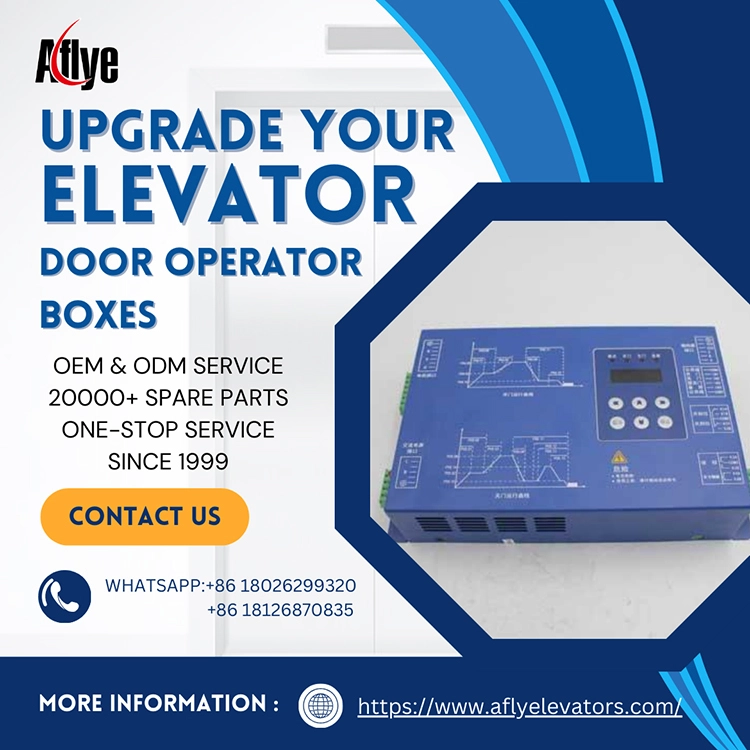
1. Aging or Damage of Internal Circuit Boards
The elevator door operator box typically contains: a control main board, drive module, power board, and other electronic components. With long-term operation, internal electronic parts may develop:
Component aging causing delayed response
Unstable power output resulting in abnormal door movement
Burnt circuits causing the door operator to fail to start
Loose solder joints causing intermittent malfunction of door actions
These issues often result in slow door movement, delayed response, or even complete failure of door opening and closing. They are the most common and unavoidable types of faults.
2. Abnormal Motor Drive Performance
The drive module inside the door operator box converts signals into motor movements. Once this part fails, the following issues may occur:
Weak motor power
Sudden stops of the door motor
Shaking during door closing
Occasional incomplete closing or opening
This commonly happens due to long-term high-load operation, overheating, or drive module aging.
3. Signal Input and Encoder Failures
The door operator box works closely with floor signals, door lock signals, and light curtain signals. If any signal becomes abnormal, the door operator may misjudge or refuse to operate. Examples include:
Lost door-lock signals causing failure to close
Light curtain false-trigger causing continuous “closing → stop → reopen” cycling
Encoder failure causing the door operator to misread door position
Encoder issues are especially common and may cause the door to reverse halfway, behave erratically, or move at abnormal speeds.
4. Mechanical Blockages Affecting Door Operator Movement
Although the door operator box is an electronic control center, the mechanical components it controls will also affect system performance. Common examples include:
Worn door hanger rollers
Loose or deformed guide shoes
Aged door ropes causing uneven traction
Misaligned door vane causing abnormal opening angle
These issues increase the load on the door operator and may lead to unstable performance or frequent fault alarms.
5. Unstable Voltage Causing Door Operator Box Malfunction
The elevator door operator system requires stable power supply. Voltage fluctuations or poor electrical contact may cause:
Sudden stop of the door operator
Temporary loss of response
Power board damage
Older buildings with unstable power supply tend to experience these problems more frequently.
6. Incorrect Parameter Settings
The door operator box contains multiple control parameters, such as:
Door opening speed
Door closing speed
Closing torque
Reversal force
Light curtain logic settings
Incorrect parameter settings may cause the door to accelerate unexpectedly, close too slowly, close too hard, or become overly sensitive—affecting both passenger comfort and safety.
A-FLY — Your Trusted Supplier for Elevator Door Operator Boxes and Door System Parts
As a professional A-FLY Elevator Parts Supplier, we provide a full series of door operator system components, including:
Elevator door operator boxes (Door Operator Box / Door Controller)
Door hanger rollers, guide wheels, guide shoes
Door vane, door lock, door rope
Light curtains and safety edges
Complete car door and landing door spare parts
A-FLY products are compatible with major elevator brands, support OEM/ODM production, and offer global shipping—providing stable and reliable door system solutions for maintenance and engineering clients.
Conclusion: Small Component, Big Impact
Due to long-term high-frequency operation, the elevator door operator box is one of the most failure-prone elevator components. Timely inspection and replacement not only prevent shutdowns and malfunctioning actions, but also ensure passenger safety.Choose A-FLY — making every door opening and closing stable, safe, and smooth.