
Common Elevator 161 Door Lock Failures & Replacement Tips
In elevator door systems, the 161-type elevator door lock assembly is one of the most widely used locking structures, commonly found in passenger and freight elevators across multiple brands and models. As a direct part of the elevator safety circuit, any abnormal door lock condition will prevent the elevator from operating and may even pose serious safety risks.
As a professional elevator & escalator parts supplier, A-FLY has observed through extensive maintenance and modernization projects that failures of the 161 door lock are not accidental—they follow clear and predictable patterns.
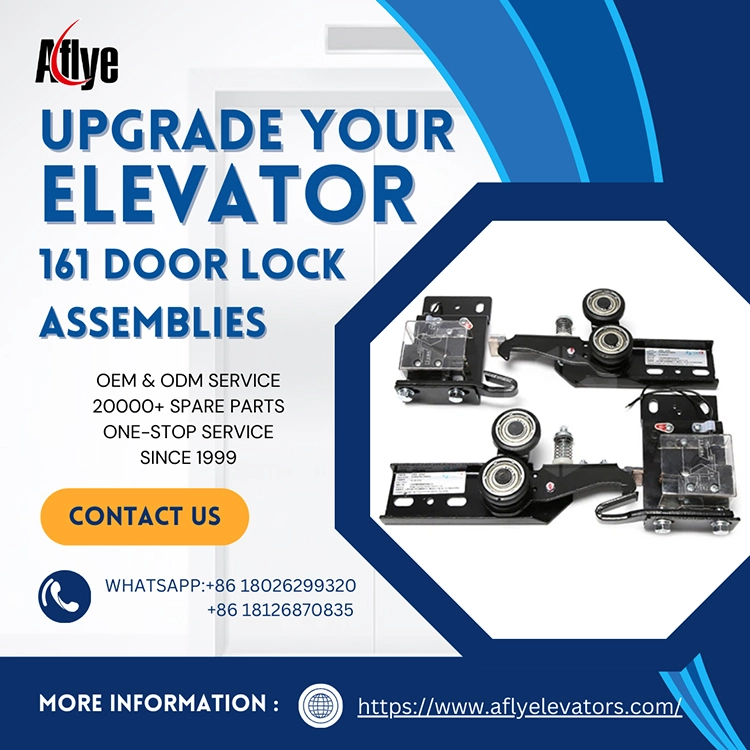
1. The Role of the 161 Door Lock in Elevator Systems
The 161 door lock assembly is designed to confirm that the landing door is fully closed and securely locked. Only when the lock contacts are in the correct state will the elevator control system permit car movement. In this sense, the door lock is the first line of defense against unintended door opening and shear-related accidents.
2. Common Causes of 161 Door Lock Failures
1) Aged or burnt contacts
Frequent door opening and closing over long periods can cause internal contacts to wear, oxidize, or burn, leading to poor contact. This often results in intermittent shutdowns or failure to start.
2) Wear of mechanical components
Springs and latches inside the 161 door lock may fatigue or deform after prolonged operation, causing incomplete locking. Even when the door appears closed, the system may still detect a “door not closed” condition.
3) Misalignment of the door lock position
Vibration in the door system or wear of door rollers and sliders can shift the relative position between the door lock and the vane, reducing the effective locking stroke.
4) Effects of humid or dusty environments
In underground parking areas, coastal regions, or high-humidity environments, door lock assemblies are prone to moisture ingress and corrosion, reducing contact sensitivity and significantly increasing failure rates.
5) Loose or aged electrical wiring
Loose terminals or aged wiring within the door lock circuit can cause unstable signals, leading to false door lock fault indications.
3. Operational Risks Caused by 161 Door Lock Failures
When a 161 door lock malfunctions, common consequences include:
Frequent “door lock not closed” fault alarms
Sudden elevator stops during operation
Repeated interruption of the safety circuit, affecting system stability
Failure to pass annual inspections or safety audits
Continued operation under these conditions may also cause further damage to other door system components.
4. Replacement Recommendations and Key Considerations
1) Replace early when intermittent faults appear
Door lock failures often show an “intermittent” pattern. Once this occurs, replacement is recommended rather than repeated adjustment.
2) Ensure correct model and structural compatibility
161 door locks from different manufacturers may vary in mounting hole spacing and latch travel. Compatibility must be confirmed before replacement.
3) Inspect related door system components simultaneously
When replacing the door lock, also check:
Door rollers and sliders
Overall door operator performance
This helps prevent rapid failure of the new lock due to existing door system issues.
4) Confirm contact ratings meet safety circuit requirements
Door lock contacts must comply with elevator safety circuit electrical standards to ensure stable and reliable signaling.
5. A-FLY — A Reliable Supplier of 161 Elevator Door Locks and Door System Components
As an experienced elevator & escalator parts supplier, A-FLY offers:
161-type elevator door lock assemblies
Various elevator door locks and safety contacts
Door operators, rollers, sliders, and related door system components
Replacement and modernization door lock solutions for existing elevators
A-FLY products are compatible with major elevator brands, support OEM / ODM customization, and are available for global delivery. They are widely used in residential, commercial, and maintenance projects worldwide.
Conclusion
Although small in size, elevator door lock assemblies play a critical role in overall elevator safety. Once a 161 door lock shows signs of failure, it should never be ignored or repeatedly adjusted for continued use. Timely replacement with high-quality door lock components is essential to ensure safe and reliable elevator operation.
Choose A-FLY to make every elevator door system safer and more dependable.