
Elevator Brake Coil Failures & Replacement Tips
In an elevator safety system, the elevator brake coil is a critical component that determines whether the brake can properly release and engage. Once the coil is damaged, the elevator may fail to start, stop unexpectedly during operation, or trigger safety protection systems frequently. Therefore, accurately identifying the cause of failure and replacing the coil correctly are essential steps in both maintenance and modernization projects.
As a professional elevator and escalator parts supplier, A-FLY has found through numerous maintenance cases that brake coil damage is rarely accidental. It is often closely related to the operating environment, installation quality, and electrical compatibility.
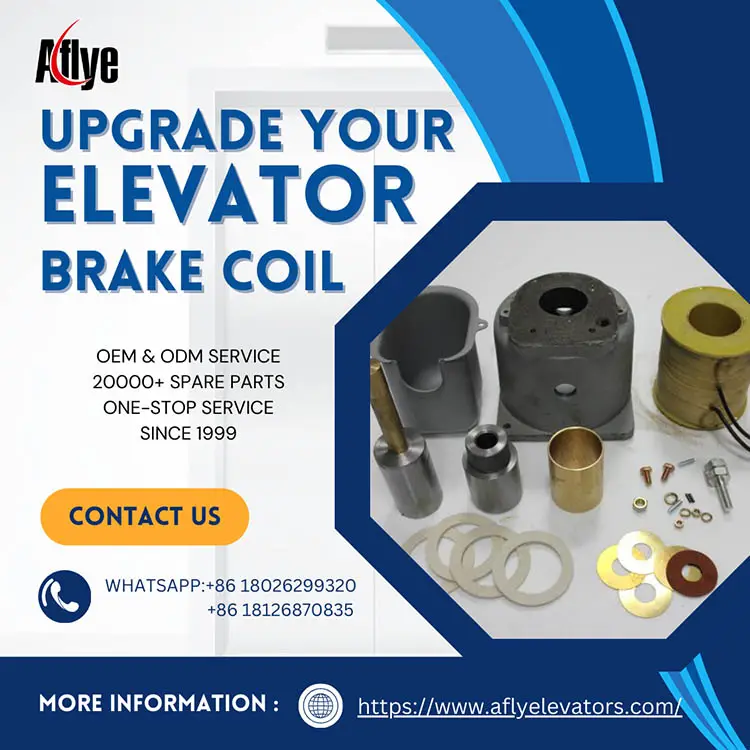
1. Common Causes of Elevator Brake Coil Damage
1. Long-term overheating leading to insulation aging
Brake coils continuously generate heat during operation. If heat dissipation is poor or the elevator frequently starts and stops, excessive temperature rise can accelerate insulation aging, eventually causing short circuits or open circuits.
2. Unstable voltage or abnormal power supply
Excessive voltage can burn out the coil, while low voltage may prevent the brake from fully releasing. When the brake remains partially engaged for long periods, the coil overheats and becomes damaged. This is especially common in areas with unstable power quality.
3. Frequent starts and heavy-duty operation
Elevators in commercial buildings and transportation hubs operate far more frequently than residential elevators. The high action frequency of the brake system places continuous heavy loads on the coil, making failure more likely.
4. Dust, oil contamination, or humid environments
Dust, oil mist, or moisture entering the machine room can reduce the coil’s insulation performance and increase the risk of leakage or electrical breakdown. This is a common hidden hazard in older elevator systems.
5. Mechanical sticking increasing electrical load
If brake components have improper clearances or springs become fatigued, the coil must generate greater electromagnetic force to release the brake. This leads to prolonged high current operation and accelerates burnout.
2. Key Considerations When Replacing an Elevator Brake Coil
1. Ensure complete electrical parameter matching
Before replacement, always confirm rated voltage, resistance, and power specifications. Mismatched elevator parts may cause abnormal braking behavior or repeated coil failure.
2. Inspect the mechanical condition of the brake
Replacing only the coil while ignoring worn brake arms, springs, or friction linings may result in excessive load on the new coil, leading to premature failure.
3. Follow proper installation and wiring procedures
Loose wiring, poor crimping, or inadequate insulation treatment can cause localized overheating or short-circuit risks.
4. Test release and braking actions for smooth operation
After replacement, repeatedly test the brake response time and release clearance to ensure sensitive operation without abnormal noise or dragging.
5. Choose a reliable elevator and escalator parts supplier
High-quality coils offer more stable insulation materials, better winding processes, and higher temperature resistance, significantly extending service life.
A-FLY Provides Professional Elevator Brake Component Support
As an experienced elevator and escalator parts supplier, A-FLY provides a wide range of elevator brake coils and related elevator components compatible with multiple brands and models. Our products feature high temperature resistance, strong stability, and long service life, helping customers improve elevator safety while reducing long-term maintenance costs.
Timely replacement of aged or damaged brake coils is an essential measure to ensure safe elevator operation and reduce unexpected downtime—an important aspect of modern elevator maintenance that should never be overlooked.