
Escalator Step Roller Noise: Causes & Replacement Guide
In high-traffic locations such as shopping malls, subway stations, and office buildings, abnormal noise from escalator step rollers is one of the most common maintenance issues. Many customers ask when purchasing escalator spare parts: Why do rollers start making noise again shortly after replacement? Do we need to replace the whole set?
This article explains the causes and provides professional selection and replacement recommendations.
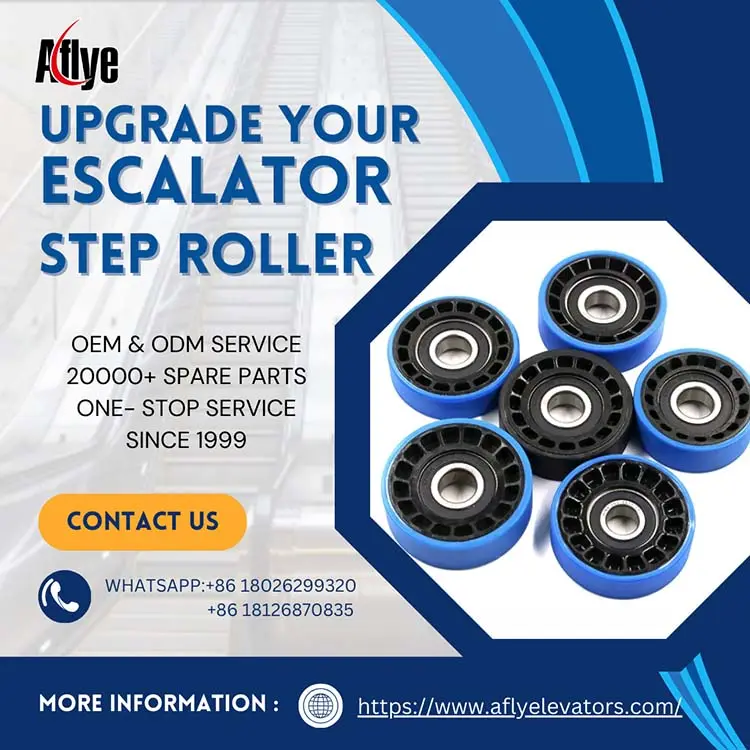
1. Why Do Escalator Step Rollers Make Noise?
Step rollers are critical mechanical transmission components in escalators. Operating continuously under heavy loads, unusual noise is usually related to the following factors:
1. Bearing wear or loss of lubrication
The internal bearings of the rollers run at high speed for long periods. Insufficient lubrication or aging seals can lead to dry friction, producing sharp metallic grinding sounds. This is the most common cause of noise.
2. Outer roller surface aging or cracking
Low-quality materials or high-temperature environments can cause the polyurethane outer layer to harden or crack. Uneven contact with the guide rail during operation then results in clicking or vibration noises.
3. Misalignment or uneven wear
Improper installation or worn guide rails can cause uneven force distribution on the rollers, leading to eccentric wear and periodic abnormal sounds.
4. Long-term overload operation
Escalators in crowded public areas often run at or near full load for extended periods, accelerating fatigue in both rollers and bearings and significantly shortening their service life.
2. What Are the Risks of Ignoring Roller Noise?
Some property managers assume that “if it still runs, replacement can wait.” In reality, roller noise is often an early warning sign of transmission system issues. Continued operation may lead to:
Uneven step movement and reduced riding comfort
Additional wear on guide rails and chain systems
In severe cases, step misalignment or jamming faults
Timely replacement with high-quality escalator roller components can help avoid much higher repair costs later.
3. How Often Should Escalator Step Rollers Be Replaced?
Under normal passenger flow conditions, the recommended replacement cycle for step rollers is 3–5 years. However, in high-traffic locations such as malls, airports, and metro stations, the actual service life may shorten to 2–3 years.
Early replacement is advised if you notice:
Obvious abnormal noise or vibration
Cracks or deformation on the roller surface
Increased bearing clearance or signs of seizure
4. How to Choose the Right Replacement Rollers
When selecting replacement rollers, it is recommended to focus on:
Wear-resistant polyurethane materials to reduce abrasion and noise
High-precision sealed bearings to extend lubrication life
Proper dimensions and load ratings that match the original equipment
As a professional elevator and escalator parts supplier, A-FLY has long provided high-durability roller solutions to maintenance companies worldwide. Our products are compatible with multiple escalator brands, available in stock, and support fast delivery to help customers minimize downtime.
Conclusion
Noise from escalator step rollers is not a minor issue — it is an early warning signal from the equipment. Choosing high-quality escalator components and following proper maintenance cycles are essential to ensure long-term safe and smooth escalator operation.