
Elevator Brake Clearance Issues: Signs & Replacement Tips
Within the elevator safety system, the elevator brake plays a critical role in preventing car slipping, overspeed, and abnormal operation. Whether the brake clearance is within a proper range directly affects braking response time and braking force performance. In real maintenance practice, abnormal brake clearance is a frequent yet often overlooked issue.
As a professional elevator and escalator spare parts supplier, A-FLY has found in numerous field cases that many braking failures are not caused by damage to the brake unit itself, but rather by improper clearance adjustment or aging related elevator spare parts.
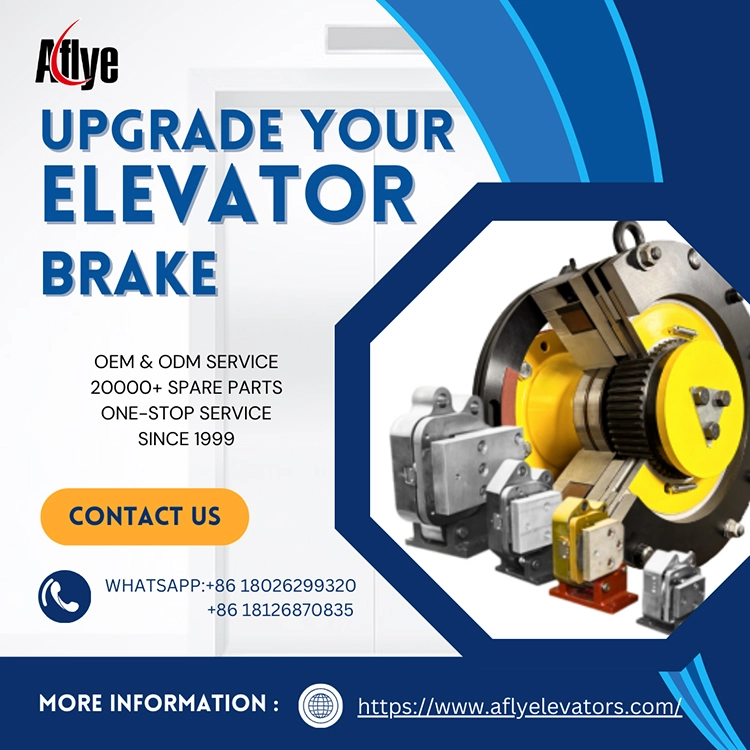
1. Common Symptoms of Abnormal Elevator Brake Clearance
When brake clearance becomes abnormal, elevators may show the following signs:
Slight car slipping or delayed stopping when the elevator comes to a halt
Noticeable impact or abnormal noise at the moment of startup
Higher-than-normal temperature rise of the brake coil, sometimes accompanied by unusual odors
Frequent brake-related fault alarms and unstable operation
These symptoms not only affect ride comfort but may also create serious hidden safety risks.
2. Main Causes of Abnormal Brake Clearance
Brake clearance does not remain constant. Over long-term operation, it may change due to several factors:
Wear of brake linings, leading to reduced effective braking force
Spring fatigue or poor reset performance, making it difficult to maintain stable clearance
Aging brake electromagnets with insufficient attraction stroke
Mechanical deformation caused by long-term high-load operation
If the clearance is adjusted without inspecting related elevator spare parts, the issue is likely to reoccur.
3. How to Inspect Whether Elevator Brake Clearance Is Abnormal
A standardized inspection procedure typically includes:
Checking the natural closed state of the brake under power-off conditions
Measuring whether the actual gap between the brake arm and brake wheel is within the specified standard range
Observing whether the brake engagement and release actions are synchronized and smooth
Combining operational data to evaluate whether braking response time is abnormal
Regular inspection is essential to prevent unexpected braking accidents.
4. When Should Brake Spare Parts Be Replaced?
When the following conditions occur, it is recommended to replace related spare parts instead of repeatedly adjusting the clearance:
Brake linings are worn close to their limit
Spring elasticity has noticeably declined
The electromagnet operates slowly or overheats abnormally
Overall brake response becomes unstable
Choosing highly compatible and durable elevator spare parts is key to ensuring long-term reliable performance of the braking system.
5. A-FLY: Providing More Reliable Support for Brake Safety
As an experienced elevator and escalator spare parts supplier, A-FLY offers a wide range of elevator brake-related spare parts suitable for different elevator brands and models. We focus not only on the products themselves, but also on their stability and safety performance under real operating conditions—helping customers reduce maintenance risks and improve overall elevator reliability.