
5 Common Causes of Elevator Button Failure
Among everyday elevator faults, elevator button failure is one of the most noticeable to users — yet often underestimated. Whether it’s a COP (Car Operating Panel) button inside the cabin or a LOP (Landing Operating Panel) button on each floor, issues such as no response when pressed, false triggering, or abnormal indicators can affect user experience, lead to maintenance complaints, and even pose safety risks.
As a professional elevator and escalator spare parts supplier, A-FLY has summarized five common causes of elevator button failure based on extensive maintenance feedback.
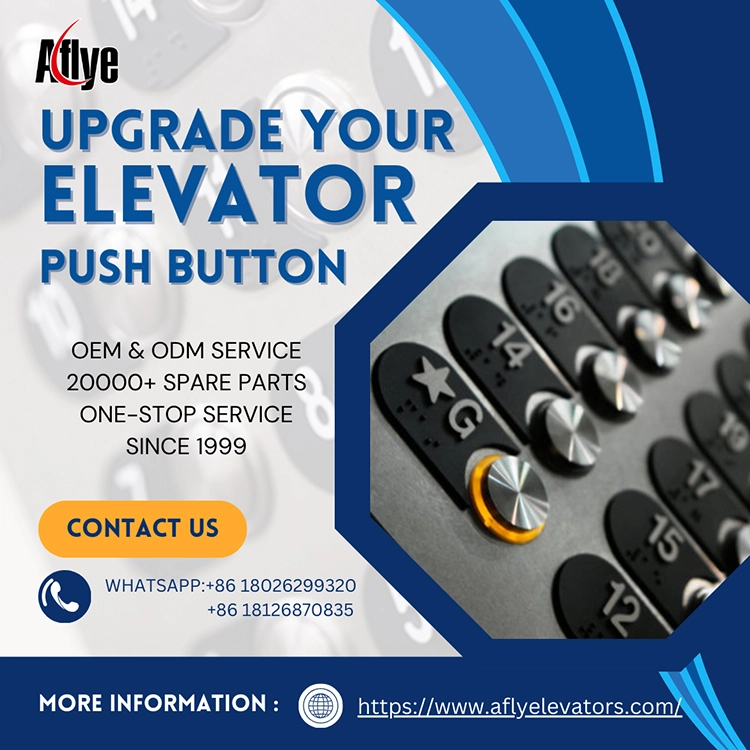
1. Contact Aging or Oxidation
Elevator buttons are high-frequency-use components. After long-term repeated pressing, internal contacts may oxidize, burn, or develop poor conductivity. This leads to unstable signal transmission and the typical issue of “sometimes working, sometimes not,” which is the most common failure mode for COP and LOP buttons.
2. Moisture and Dust Ingress
In high-humidity regions or poorly maintained environments, moisture and dust can easily enter the button assembly, causing short circuits or contact contamination. LOP buttons, being exposed to external environments, are particularly vulnerable and often fail more frequently than cabin buttons.
3. Structural Fatigue or Poor Button Return
Some low-quality buttons suffer from internal spring fatigue or weakened return mechanisms after extended use. At first, the issue may seem minor, but it can gradually develop into situations where the button does not fully reset, requires extra force to activate, or stops responding altogether.
4. Signal Board or Wiring Problems
The button itself is not always the only cause. Faults in the signal board, ribbon cables, or loose terminals behind the button can prevent commands from being transmitted correctly. In such cases, simply replacing the button will not completely solve the issue — related elevator electrical components must also be checked.
5. Model Mismatch or Poor Compatibility
During elevator modernization or non-original part replacement, using buttons with mismatched models, voltages, or communication protocols can lead to abnormal indicator lights, delayed responses, or frequent system errors. Choosing high-compatibility button components is therefore essential.
How to Reduce Elevator Button Failures
From a long-term operation perspective, selecting durable, well-sealed, and highly compatible elevator buttons is far more cost-effective than frequent repairs. A-FLY provides a wide range of COP and LOP button solutions compatible with different elevator brands and market requirements, helping maintenance teams reduce repeat failures and improve overall elevator system stability.